Buy wohnung-mieten.eu ?
We are moving the project
wohnung-mieten.eu .
Are you interested in purchasing the domain
wohnung-mieten.eu ?
domain@kv-gmbh.de · 0541-91531010
Buy wohnung-mieten.eu ?
What does adiabatic dry, adiabatic moist, and adiabatic mean?
Adiabatic dry refers to the process of air cooling or warming without any exchange of heat with its surroundings. Adiabatic moist refers to the same process, but with the presence of water vapor in the air. Adiabatic, in general, means a process that occurs without any heat transfer between the system and its surroundings. These terms are commonly used in meteorology to describe the cooling or warming of air as it rises or descends in the atmosphere. **
What is the dry adiabatic and moist adiabatic temperature gradient?
The dry adiabatic temperature gradient is the rate at which the temperature of a parcel of dry air changes as it rises or descends in the atmosphere without exchanging heat with its surroundings. It is approximately 9.8°C per kilometer. The moist adiabatic temperature gradient, on the other hand, is the rate at which the temperature of a parcel of moist air changes as it rises or descends in the atmosphere while undergoing condensation or evaporation. It is approximately 5-6°C per kilometer. The difference in these gradients is due to the fact that latent heat is released or absorbed during the phase change of water vapor in the atmosphere, affecting the rate at which the temperature changes with altitude. **


Similar search terms for Adiabatic
Top-Angebote
Products related to Adiabatic:
-
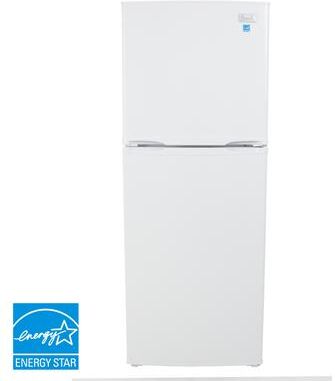
Avanti 11.6 cu. ft. Apartment Size Refrigerator, in WhiteStore your favorite food and beverages in this 11.6 cubic feet, white refrigerator from Avanti. The perfect apartment-size refrigerator, your food, and beverages stay fresh and cold thanks to the frost-free defrost system.965,99 $*Shipping: 0,00 $Secure redirect to the provider
-
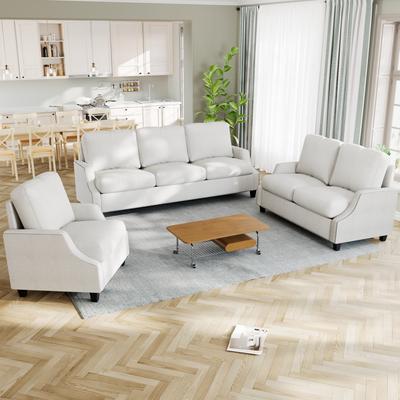
GDFStudio - Polyester 3-Piece Living Room Sofa Furniture Sets for ApartmentStatement Scale & Balanced Proportion: This three-piece living room set is designed to form an inviting yet composed seating group for everyday life — a three-seater sofa, a two-seater loveseat and a single accent chair that together offer abundant…937,38 $*Shipping: 0,00 $Secure redirect to the provider
-
HOOOWOOO Mid-Century Modern Upholstered 3 Seat Sofa Couch for ApartmentEnjoy the comfort and beauty on every lazy afternoon with HOOOWOOO Mid-Century Modern Upholstered 3 Seat Sofa. This sofa is constructed of sturdy wood and steel frame, giving fully solidity and durability that can support up to 400 lbs weight capacity.483,49 $*Shipping: 0,00 $Secure redirect to the provider


-
What does moist adiabatic mean?
Moist adiabatic refers to the process of air rising and cooling at a constant rate due to expansion, without exchanging heat with its surroundings. This cooling rate is slower than the dry adiabatic lapse rate because the air contains moisture, which releases latent heat as it condenses. The presence of moisture in the air affects how quickly it cools or warms as it rises or descends in the atmosphere. **
-
What does reversible and adiabatic mean?
Reversible refers to a process that can be reversed without any net change in the system or its surroundings. In a reversible process, the system remains in equilibrium with its surroundings at all times. Adiabatic refers to a process in which there is no heat exchange between the system and its surroundings. This means that the change in the system occurs without any heat entering or leaving the system. **
-
What is the difference between moist adiabatic and dry adiabatic, and how do relative humidity and absolute humidity differ?
Moist adiabatic lapse rate refers to the rate at which a parcel of saturated air cools as it rises, while dry adiabatic lapse rate refers to the rate at which a parcel of unsaturated air cools as it rises. Moist adiabatic lapse rate is lower than dry adiabatic lapse rate due to the release of latent heat during condensation. Relative humidity is the ratio of the amount of water vapor present in the air to the maximum amount of water vapor the air can hold at a specific temperature, while absolute humidity is the actual amount of water vapor present in the air regardless of temperature. **
-
What is the difference between adiabatic and isenthalpic?
Adiabatic and isenthalpic processes are both types of thermodynamic processes, but they differ in the specific properties they involve. Adiabatic processes occur without the transfer of heat, meaning there is no heat exchange with the surroundings. Isenthalpic processes, on the other hand, occur at constant enthalpy, meaning the total heat content of the system remains constant. In summary, adiabatic processes involve no heat transfer, while isenthalpic processes involve constant enthalpy. **

What is the work of an adiabatic process?
An adiabatic process is a thermodynamic process in which there is no heat transfer into or out of the system. This means that the change in the system's internal energy is solely due to the work done on or by the system. In an adiabatic expansion, for example, the system does work on its surroundings without any heat being added to the system. This can lead to changes in temperature, pressure, and volume of the system. Adiabatic processes are commonly seen in the expansion or compression of gases. **
How do you calculate the internal energy in adiabatic processes?
In an adiabatic process, there is no heat exchange with the surroundings, so the change in internal energy is solely due to work done on or by the system. The internal energy change in an adiabatic process can be calculated using the first law of thermodynamics, which states that the change in internal energy is equal to the work done on the system. Mathematically, this can be expressed as ΔU = -W, where ΔU is the change in internal energy and W is the work done on the system. Therefore, to calculate the internal energy change in an adiabatic process, one needs to determine the work done on the system. **
Top-Angebote
Products related to Adiabatic:
-
Stellar Zero Uncoated Apartment Essentials BundleEnjoy effortless cooking without traditional non-stick coatings with the Stellar Zero Uncoated Apartment Essentials Bundle. Made from 100% pure stainless steel with an innovative precision-etched cooking surface, this versatile three-piece set provides excellent food release without the use of PFAS or PTFE coatings. Featuring Tri-Ply construction, each pan combines layers of stainless steel and aluminium to provide fast, even heat distribution and excellent temperature control. The pans respond quickly to changes in heat, helping you achieve consistent results while cooking efficiently. The set includes a 24cm frying pan, 28cm sauté pan with glass lid and a 24cm casserole, providing three essential pieces for everyday cooking. From frying and searing to simmering, slow cooking and preparing family favourites, this versatile selection is ideal for a wide range of dishes. The uncoated stainless steel construction offers the durability of stainless steel without a conventional non-stick coating. The precision-etched surface is designed to provide non-stick performance and is safe to use with metal utensils, making it well suited to everyday cooking. Suitable for all hob types, including induction, the cookware is oven safe up to 240°C and dishwasher safe for easy cleaning. Backed by Stellar's 25-year guarantee, the Zero collection combines innovative uncoated cooking technology with durable construction designed to last.224,95 £*Shipping: 0,00 £Secure redirect to the provider
-
Avanti 11.6 cu. ft. Apartment Size Refrigerator, in WhiteStore your favorite food and beverages in this 11.6 cubic feet, white refrigerator from Avanti. The perfect apartment-size refrigerator, your food, and beverages stay fresh and cold thanks to the frost-free defrost system.965,99 $*Shipping: 0,00 $Secure redirect to the provider
-
What does adiabatic dry, adiabatic moist, and adiabatic mean?
Adiabatic dry refers to the process of air cooling or warming without any exchange of heat with its surroundings. Adiabatic moist refers to the same process, but with the presence of water vapor in the air. Adiabatic, in general, means a process that occurs without any heat transfer between the system and its surroundings. These terms are commonly used in meteorology to describe the cooling or warming of air as it rises or descends in the atmosphere. **
-
What is the dry adiabatic and moist adiabatic temperature gradient?
The dry adiabatic temperature gradient is the rate at which the temperature of a parcel of dry air changes as it rises or descends in the atmosphere without exchanging heat with its surroundings. It is approximately 9.8°C per kilometer. The moist adiabatic temperature gradient, on the other hand, is the rate at which the temperature of a parcel of moist air changes as it rises or descends in the atmosphere while undergoing condensation or evaporation. It is approximately 5-6°C per kilometer. The difference in these gradients is due to the fact that latent heat is released or absorbed during the phase change of water vapor in the atmosphere, affecting the rate at which the temperature changes with altitude. **
-
What does moist adiabatic mean?
Moist adiabatic refers to the process of air rising and cooling at a constant rate due to expansion, without exchanging heat with its surroundings. This cooling rate is slower than the dry adiabatic lapse rate because the air contains moisture, which releases latent heat as it condenses. The presence of moisture in the air affects how quickly it cools or warms as it rises or descends in the atmosphere. **
-
What does reversible and adiabatic mean?
Reversible refers to a process that can be reversed without any net change in the system or its surroundings. In a reversible process, the system remains in equilibrium with its surroundings at all times. Adiabatic refers to a process in which there is no heat exchange between the system and its surroundings. This means that the change in the system occurs without any heat entering or leaving the system. **
Similar search terms for Adiabatic
-
GDFStudio - Polyester 3-Piece Living Room Sofa Furniture Sets for ApartmentStatement Scale & Balanced Proportion: This three-piece living room set is designed to form an inviting yet composed seating group for everyday life — a three-seater sofa, a two-seater loveseat and a single accent chair that together offer abundant…937,38 $*Shipping: 0,00 $Secure redirect to the provider
-
HOOOWOOO Mid-Century Modern Upholstered 3 Seat Sofa Couch for ApartmentEnjoy the comfort and beauty on every lazy afternoon with HOOOWOOO Mid-Century Modern Upholstered 3 Seat Sofa. This sofa is constructed of sturdy wood and steel frame, giving fully solidity and durability that can support up to 400 lbs weight capacity.483,49 $*Shipping: 0,00 $Secure redirect to the provider
-
What is the difference between moist adiabatic and dry adiabatic, and how do relative humidity and absolute humidity differ?
Moist adiabatic lapse rate refers to the rate at which a parcel of saturated air cools as it rises, while dry adiabatic lapse rate refers to the rate at which a parcel of unsaturated air cools as it rises. Moist adiabatic lapse rate is lower than dry adiabatic lapse rate due to the release of latent heat during condensation. Relative humidity is the ratio of the amount of water vapor present in the air to the maximum amount of water vapor the air can hold at a specific temperature, while absolute humidity is the actual amount of water vapor present in the air regardless of temperature. **
-
What is the difference between adiabatic and isenthalpic?
Adiabatic and isenthalpic processes are both types of thermodynamic processes, but they differ in the specific properties they involve. Adiabatic processes occur without the transfer of heat, meaning there is no heat exchange with the surroundings. Isenthalpic processes, on the other hand, occur at constant enthalpy, meaning the total heat content of the system remains constant. In summary, adiabatic processes involve no heat transfer, while isenthalpic processes involve constant enthalpy. **
-
What is the work of an adiabatic process?
An adiabatic process is a thermodynamic process in which there is no heat transfer into or out of the system. This means that the change in the system's internal energy is solely due to the work done on or by the system. In an adiabatic expansion, for example, the system does work on its surroundings without any heat being added to the system. This can lead to changes in temperature, pressure, and volume of the system. Adiabatic processes are commonly seen in the expansion or compression of gases. **
-
How do you calculate the internal energy in adiabatic processes?
In an adiabatic process, there is no heat exchange with the surroundings, so the change in internal energy is solely due to work done on or by the system. The internal energy change in an adiabatic process can be calculated using the first law of thermodynamics, which states that the change in internal energy is equal to the work done on the system. Mathematically, this can be expressed as ΔU = -W, where ΔU is the change in internal energy and W is the work done on the system. Therefore, to calculate the internal energy change in an adiabatic process, one needs to determine the work done on the system. **
* All prices are inclusive of VAT and, if applicable, plus shipping costs. The offer information is based on the details provided by the respective shop and is updated through automated processes. Real-time updates do not occur, so deviations can occur in individual cases. ** Note: Parts of this content were created by AI.