Buy wohnung-mieten.eu ?
We are moving the project
wohnung-mieten.eu .
Are you interested in purchasing the domain
wohnung-mieten.eu ?
domain@kv-gmbh.de · 0541-91531010
Buy wohnung-mieten.eu ?
Do all evolutionary factors have to act in synthetic evolutionary theory?
In synthetic evolutionary theory, not all evolutionary factors have to act in isolation. Instead, the theory emphasizes the interaction and integration of multiple factors, such as genetic variation, natural selection, genetic drift, and gene flow, in shaping the evolutionary process. This approach recognizes that evolution is a complex and multifaceted phenomenon, and that the combined effects of these factors can lead to the emergence of new traits and species. By considering the interactions among these factors, synthetic evolutionary theory provides a more comprehensive understanding of the evolutionary process. **
Is love of evolutionary origin?
Yes, the concept of love is believed to have evolutionary origins. Evolutionary psychologists suggest that love developed as a mechanism to promote bonding and cooperation between individuals, which increased the chances of survival and reproduction. The feelings of attachment, care, and protection associated with love are thought to have evolved to ensure the successful raising of offspring. Therefore, love is considered to have evolved as an adaptive trait that has persisted over time due to its benefits for human survival and reproduction. **


Similar search terms for Evolutionary
Top-Angebote
Products related to Evolutionary:
-
Avanti 11.6 cu. ft. Apartment Size Refrigerator, in WhiteStore your favorite food and beverages in this 11.6 cubic feet, white refrigerator from Avanti. The perfect apartment-size refrigerator, your food, and beverages stay fresh and cold thanks to the frost-free defrost system.965,99 $*Shipping: 0,00 $Secure redirect to the provider
-
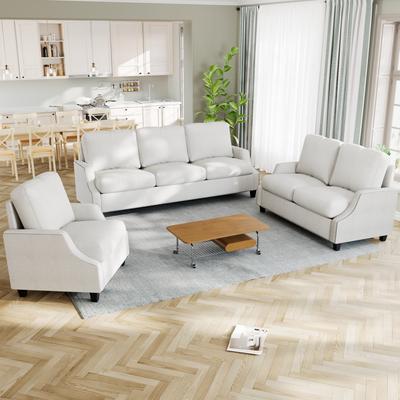
GDFStudio - Polyester 3-Piece Living Room Sofa Furniture Sets for ApartmentStatement Scale & Balanced Proportion: This three-piece living room set is designed to form an inviting yet composed seating group for everyday life — a three-seater sofa, a two-seater loveseat and a single accent chair that together offer abundant…940,09 $*Shipping: 0,00 $Secure redirect to the provider
-
Space-Saving Foldable Computer Desk for Home Office, Bedroom, Dorm, Apartment"This foldable desk offers a wide surface for laptops, monitors, or decor, along with shelves and storage for books and supplies. Its space-saving design folds down to just 13.14"" wide, making it ideal for bedrooms, apartments, dorms, and small offices."445,49 $*Shipping: 0,00 $Secure redirect to the provider



-
What is an evolutionary brake?
An evolutionary brake refers to a factor or mechanism that slows down or limits the rate of evolution within a population or species. This can include environmental factors, such as limited resources or harsh conditions, that restrict the ability of individuals with certain traits to survive and reproduce. Additionally, genetic factors, such as mutations that are detrimental to an organism's survival or reproduction, can act as evolutionary brakes by preventing those traits from becoming more common in a population. Overall, evolutionary brakes help to maintain genetic diversity and prevent rapid and potentially harmful changes in a population. **
-
Do blood types have evolutionary advantages?
Yes, blood types are believed to have evolutionary advantages. For example, the ABO blood group system is thought to have evolved as a way to protect against certain diseases. Individuals with type O blood are less susceptible to severe malaria, while those with type A blood may have a higher risk of developing certain types of cancer. Additionally, the Rh factor in blood types is thought to have evolved as a way to protect against certain infections. Overall, blood types are believed to have evolved as a way to provide some level of protection against various diseases and infections. **
-
What are evolutionary directions in biology?
Evolutionary directions in biology refer to the changes and adaptations that occur in living organisms over time. These changes can include the development of new traits, behaviors, or structures that help organisms better survive and reproduce in their environment. Evolutionary directions can also involve the branching out of new species from a common ancestor, leading to the diversity of life we see today. By studying these evolutionary directions, scientists can gain insights into the history and relationships of different species, as well as how organisms may continue to evolve in the future. **
-
What is the evolutionary factor selection?
Evolution by natural selection is the process by which organisms with advantageous traits are more likely to survive, reproduce, and pass on those traits to their offspring. This leads to the gradual accumulation of beneficial traits in a population over generations, resulting in the adaptation of organisms to their environment. The key components of natural selection are variation in traits, heritability of those traits, and differential reproductive success based on those traits. Ultimately, natural selection is the driving force behind the diversity of life on Earth. **


Are there evolutionary reasons for ADHD?
There is evidence to suggest that there may be evolutionary reasons for ADHD. Some researchers propose that the traits associated with ADHD, such as impulsivity and hyperactivity, may have been advantageous in certain ancestral environments. For example, individuals with ADHD traits may have been better suited for tasks that required quick decision-making and action, such as hunting or gathering. However, in modern society, these traits can be disruptive and impairing, leading to the diagnosis of ADHD. Further research is needed to fully understand the evolutionary origins of ADHD. **
Can one force an evolutionary change?
Evolutionary change occurs over long periods of time through natural selection, genetic mutation, and other factors. It is not possible to force an evolutionary change in a specific direction or within a short period of time. However, humans have influenced the evolution of certain species through selective breeding and genetic engineering. These interventions can lead to changes in the genetic makeup of a population, but they are not considered natural evolutionary processes. Overall, while humans can influence the genetic makeup of a population, they cannot force an evolutionary change in the traditional sense. **
Top-Angebote
Products related to Evolutionary:
-
Stellar Zero Uncoated Apartment Essentials BundleEnjoy effortless cooking without traditional non-stick coatings with the Stellar Zero Uncoated Apartment Essentials Bundle. Made from 100% pure stainless steel with an innovative precision-etched cooking surface, this versatile three-piece set provides excellent food release without the use of PFAS or PTFE coatings. Featuring Tri-Ply construction, each pan combines layers of stainless steel and aluminium to provide fast, even heat distribution and excellent temperature control. The pans respond quickly to changes in heat, helping you achieve consistent results while cooking efficiently. The set includes a 24cm frying pan, 28cm sauté pan with glass lid and a 24cm casserole, providing three essential pieces for everyday cooking. From frying and searing to simmering, slow cooking and preparing family favourites, this versatile selection is ideal for a wide range of dishes. The uncoated stainless steel construction offers the durability of stainless steel without a conventional non-stick coating. The precision-etched surface is designed to provide non-stick performance and is safe to use with metal utensils, making it well suited to everyday cooking. Suitable for all hob types, including induction, the cookware is oven safe up to 240°C and dishwasher safe for easy cleaning. Backed by Stellar's 25-year guarantee, the Zero collection combines innovative uncoated cooking technology with durable construction designed to last.224,95 £*Shipping: 0,00 £Secure redirect to the provider
-
Avanti 11.6 cu. ft. Apartment Size Refrigerator, in WhiteStore your favorite food and beverages in this 11.6 cubic feet, white refrigerator from Avanti. The perfect apartment-size refrigerator, your food, and beverages stay fresh and cold thanks to the frost-free defrost system.965,99 $*Shipping: 0,00 $Secure redirect to the provider
-
Do all evolutionary factors have to act in synthetic evolutionary theory?
In synthetic evolutionary theory, not all evolutionary factors have to act in isolation. Instead, the theory emphasizes the interaction and integration of multiple factors, such as genetic variation, natural selection, genetic drift, and gene flow, in shaping the evolutionary process. This approach recognizes that evolution is a complex and multifaceted phenomenon, and that the combined effects of these factors can lead to the emergence of new traits and species. By considering the interactions among these factors, synthetic evolutionary theory provides a more comprehensive understanding of the evolutionary process. **
-
Is love of evolutionary origin?
Yes, the concept of love is believed to have evolutionary origins. Evolutionary psychologists suggest that love developed as a mechanism to promote bonding and cooperation between individuals, which increased the chances of survival and reproduction. The feelings of attachment, care, and protection associated with love are thought to have evolved to ensure the successful raising of offspring. Therefore, love is considered to have evolved as an adaptive trait that has persisted over time due to its benefits for human survival and reproduction. **
-
What is an evolutionary brake?
An evolutionary brake refers to a factor or mechanism that slows down or limits the rate of evolution within a population or species. This can include environmental factors, such as limited resources or harsh conditions, that restrict the ability of individuals with certain traits to survive and reproduce. Additionally, genetic factors, such as mutations that are detrimental to an organism's survival or reproduction, can act as evolutionary brakes by preventing those traits from becoming more common in a population. Overall, evolutionary brakes help to maintain genetic diversity and prevent rapid and potentially harmful changes in a population. **
-
Do blood types have evolutionary advantages?
Yes, blood types are believed to have evolutionary advantages. For example, the ABO blood group system is thought to have evolved as a way to protect against certain diseases. Individuals with type O blood are less susceptible to severe malaria, while those with type A blood may have a higher risk of developing certain types of cancer. Additionally, the Rh factor in blood types is thought to have evolved as a way to protect against certain infections. Overall, blood types are believed to have evolved as a way to provide some level of protection against various diseases and infections. **
Similar search terms for Evolutionary
-
GDFStudio - Polyester 3-Piece Living Room Sofa Furniture Sets for ApartmentStatement Scale & Balanced Proportion: This three-piece living room set is designed to form an inviting yet composed seating group for everyday life — a three-seater sofa, a two-seater loveseat and a single accent chair that together offer abundant…940,09 $*Shipping: 0,00 $Secure redirect to the provider
-
Space-Saving Foldable Computer Desk for Home Office, Bedroom, Dorm, Apartment"This foldable desk offers a wide surface for laptops, monitors, or decor, along with shelves and storage for books and supplies. Its space-saving design folds down to just 13.14"" wide, making it ideal for bedrooms, apartments, dorms, and small offices."445,49 $*Shipping: 0,00 $Secure redirect to the provider
-
Modern Couch Fabric Comfy Sofa bed for Apartment, Living Room, StudioProduct Features Multifunctional sofa bed:Suitable for Any Scene,No Longer Worry about Unexpected Guests. User-friendly Design: easy to store the chair and save space for unused time.289,99 $*Shipping: 0,00 $Secure redirect to the provider
-
What are evolutionary directions in biology?
Evolutionary directions in biology refer to the changes and adaptations that occur in living organisms over time. These changes can include the development of new traits, behaviors, or structures that help organisms better survive and reproduce in their environment. Evolutionary directions can also involve the branching out of new species from a common ancestor, leading to the diversity of life we see today. By studying these evolutionary directions, scientists can gain insights into the history and relationships of different species, as well as how organisms may continue to evolve in the future. **
-
What is the evolutionary factor selection?
Evolution by natural selection is the process by which organisms with advantageous traits are more likely to survive, reproduce, and pass on those traits to their offspring. This leads to the gradual accumulation of beneficial traits in a population over generations, resulting in the adaptation of organisms to their environment. The key components of natural selection are variation in traits, heritability of those traits, and differential reproductive success based on those traits. Ultimately, natural selection is the driving force behind the diversity of life on Earth. **
-
Are there evolutionary reasons for ADHD?
There is evidence to suggest that there may be evolutionary reasons for ADHD. Some researchers propose that the traits associated with ADHD, such as impulsivity and hyperactivity, may have been advantageous in certain ancestral environments. For example, individuals with ADHD traits may have been better suited for tasks that required quick decision-making and action, such as hunting or gathering. However, in modern society, these traits can be disruptive and impairing, leading to the diagnosis of ADHD. Further research is needed to fully understand the evolutionary origins of ADHD. **
-
Can one force an evolutionary change?
Evolutionary change occurs over long periods of time through natural selection, genetic mutation, and other factors. It is not possible to force an evolutionary change in a specific direction or within a short period of time. However, humans have influenced the evolution of certain species through selective breeding and genetic engineering. These interventions can lead to changes in the genetic makeup of a population, but they are not considered natural evolutionary processes. Overall, while humans can influence the genetic makeup of a population, they cannot force an evolutionary change in the traditional sense. **
* All prices are inclusive of VAT and, if applicable, plus shipping costs. The offer information is based on the details provided by the respective shop and is updated through automated processes. Real-time updates do not occur, so deviations can occur in individual cases. ** Note: Parts of this content were created by AI.